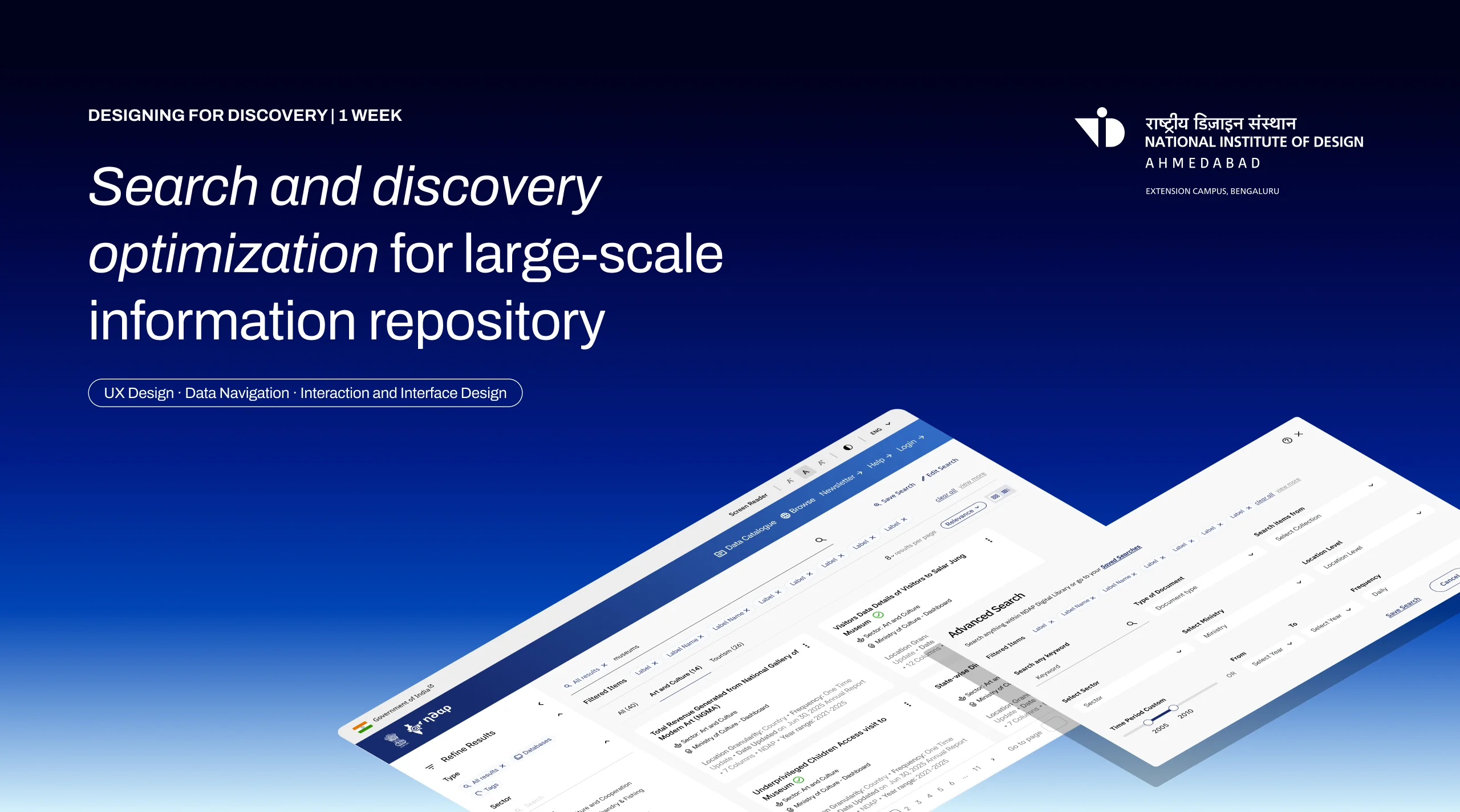

What is NDAP?
The National Data and Analytics Platform, a flagship initiative by NITI Aayog designed to democratize and improve access to government data in India: a centralized repository of government datasets, standardized data, interactive tools to search, filter, visualize and download data, for policymakers, researchers, journalists, innovators and citizens.
The rise of data and digital technologies are rapidly transforming economies and societies, with enormous implications for governments’ daily operations. NDAP is a critical milestone – which aims to aid India’s progress by promoting data-driven disclosure, decision making and ensuring availability of data connecting till the last mile, is an example to how the power of data can be leveraged.
Overview
Redesigning the National Data & Analytics Platform (NDAP) search experience to improve the discoverability, accessibility, and usability of public datasets across government sectors.
Problem area
The project explores how users navigate large volumes of public data on NDAP, seeking to identify potential gaps in discoverability, navigation, and search usability.
How might we
make public datasets easier to discover, navigate, and interpret through a more intuitive and user-centric search experience?
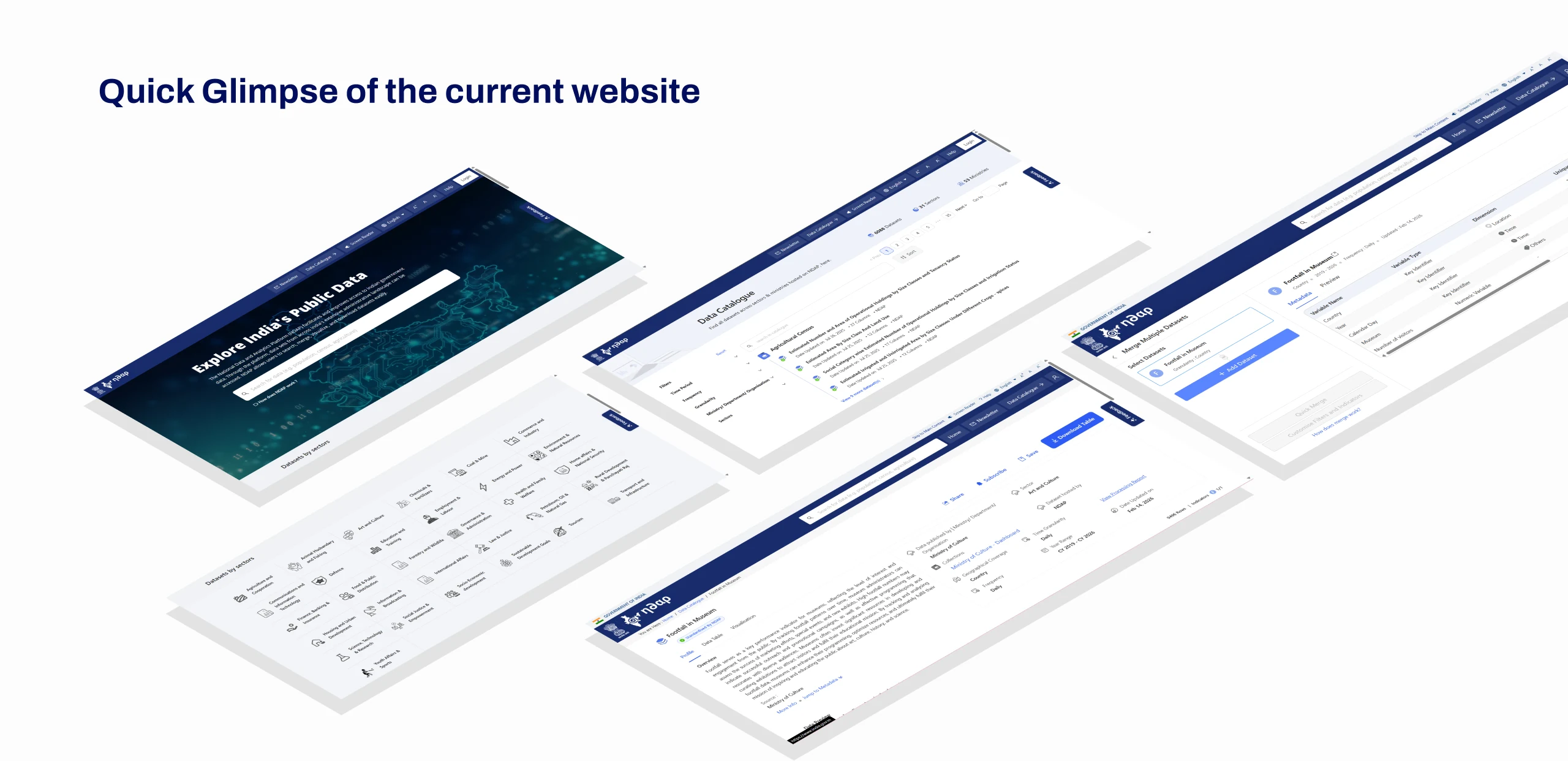
Quick glimpse of the current website
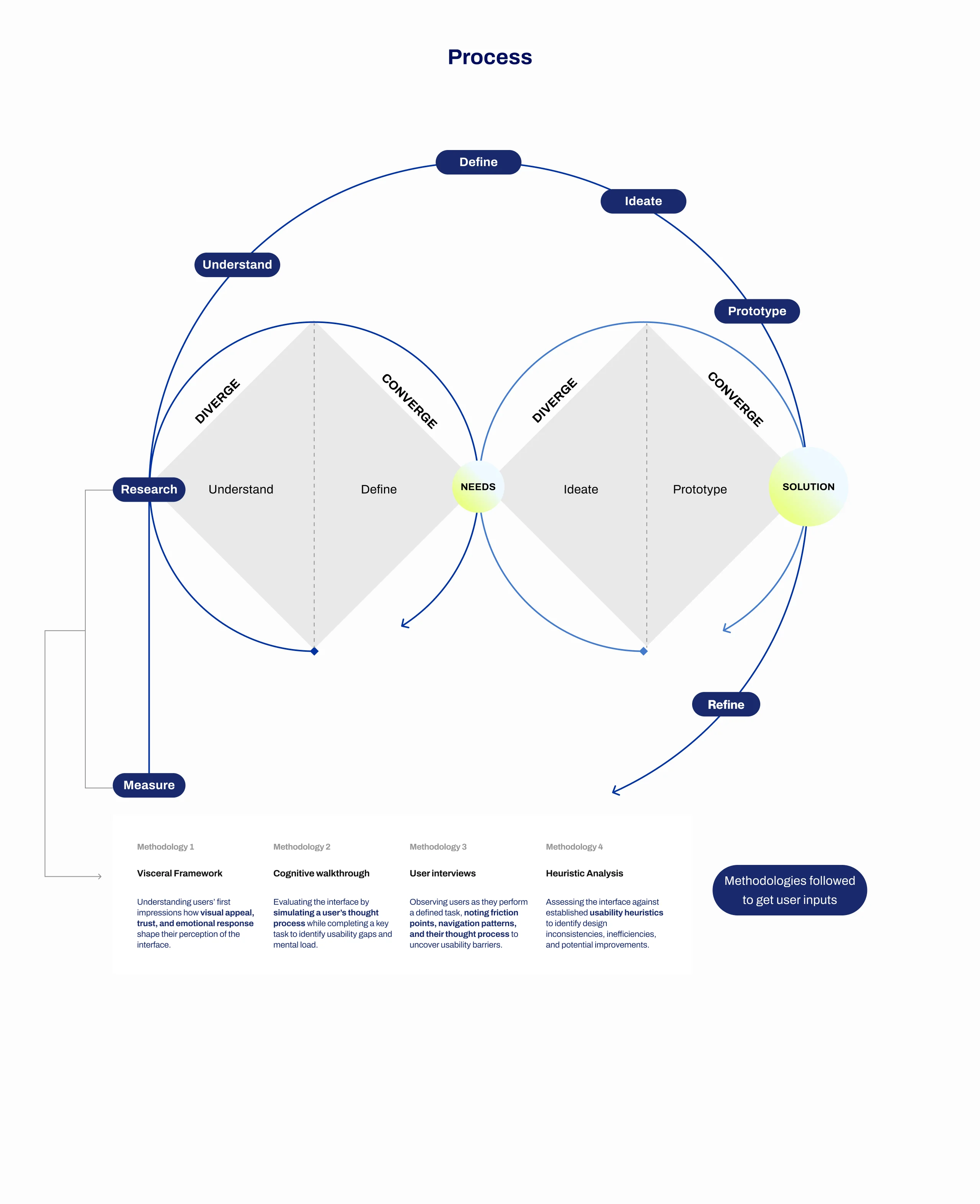
Process
A double diamond: research and understand, define, ideate, prototype and refine, with methodologies followed to get user inputs.
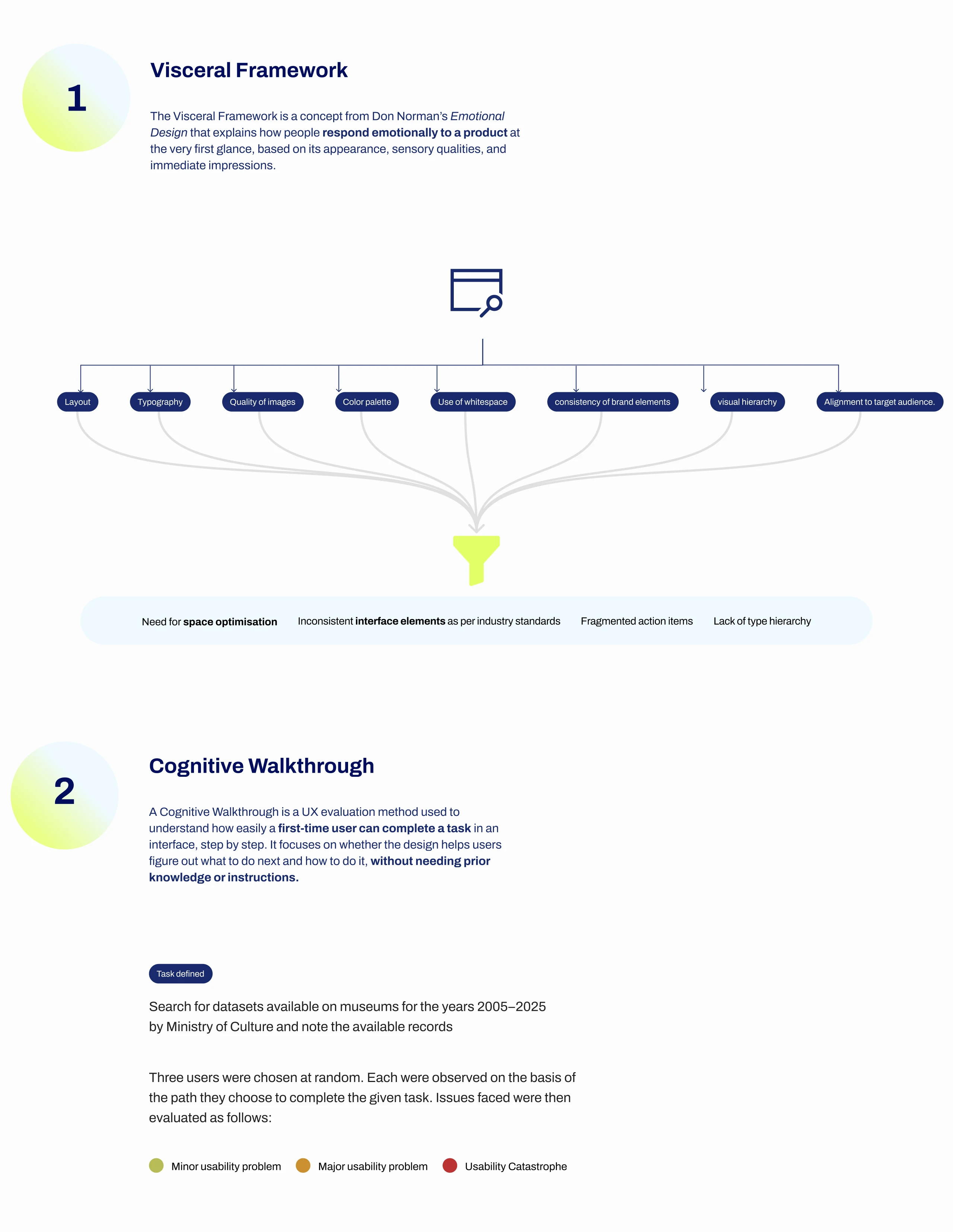
Visceral framework and cognitive walkthrough
The Visceral Framework is a concept from Don Norman’s Emotional Design that explains how people respond emotionally to a product at the very first glance. A Cognitive Walkthrough is a UX evaluation method used to understand how easily a first-time user can complete a task in an interface, step by step.
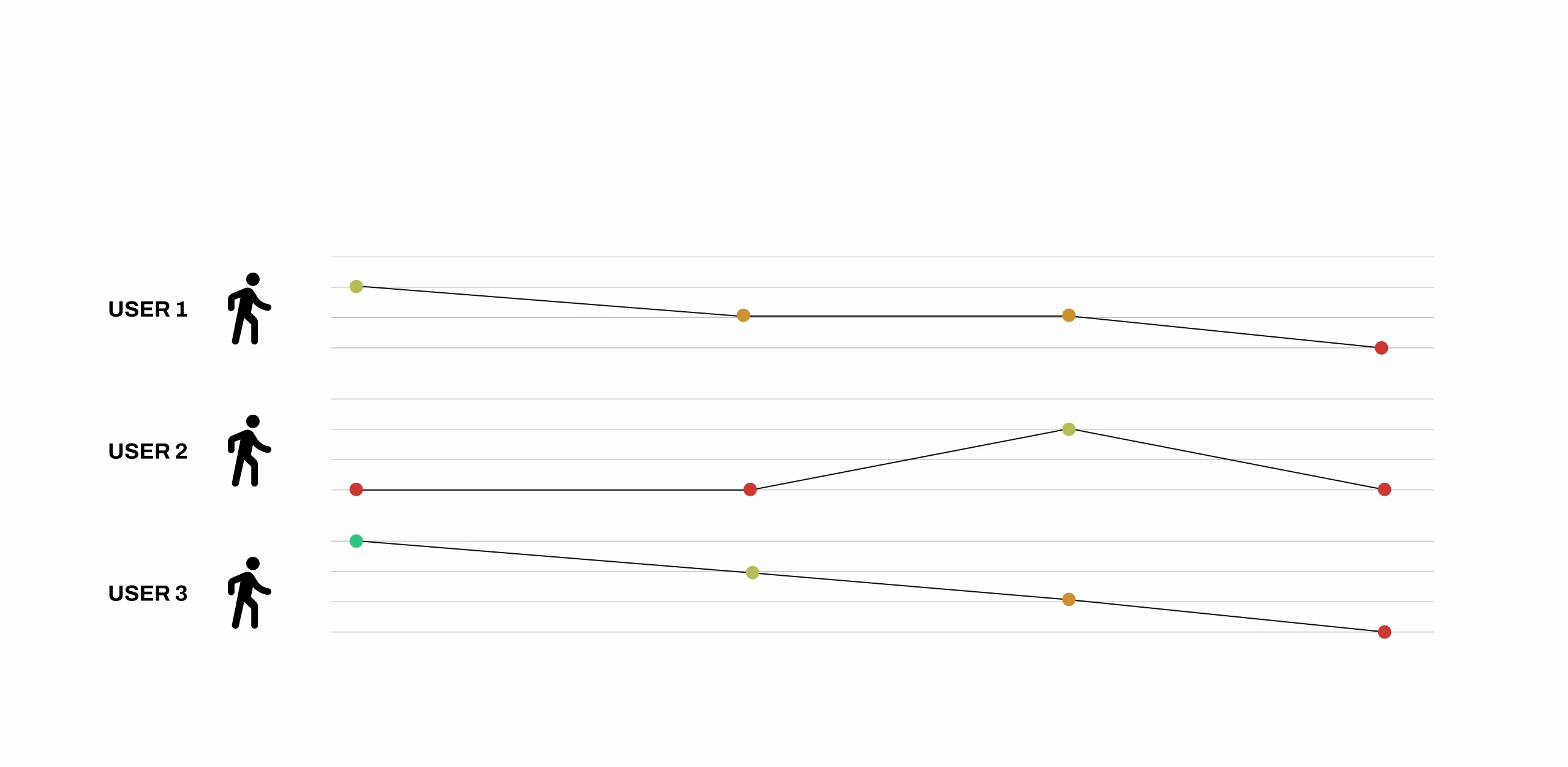
How three users moved through the search task, step by step.
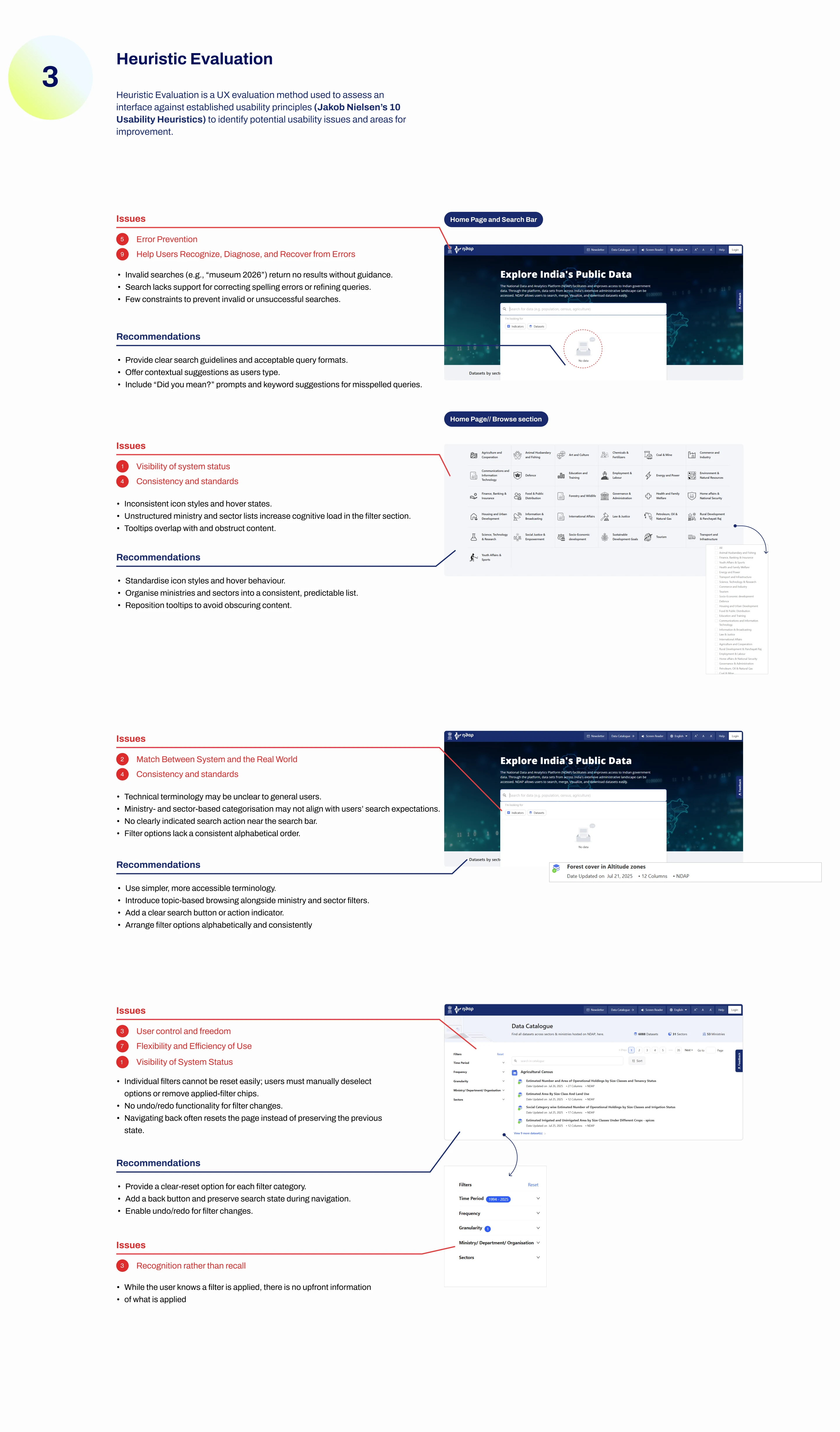
Heuristic evaluation
Heuristic Evaluation is a UX evaluation method used to assess an interface against established usability principles (Jakob Nielsen’s 10 Usability Heuristics) to identify potential usability issues and areas for improvement.
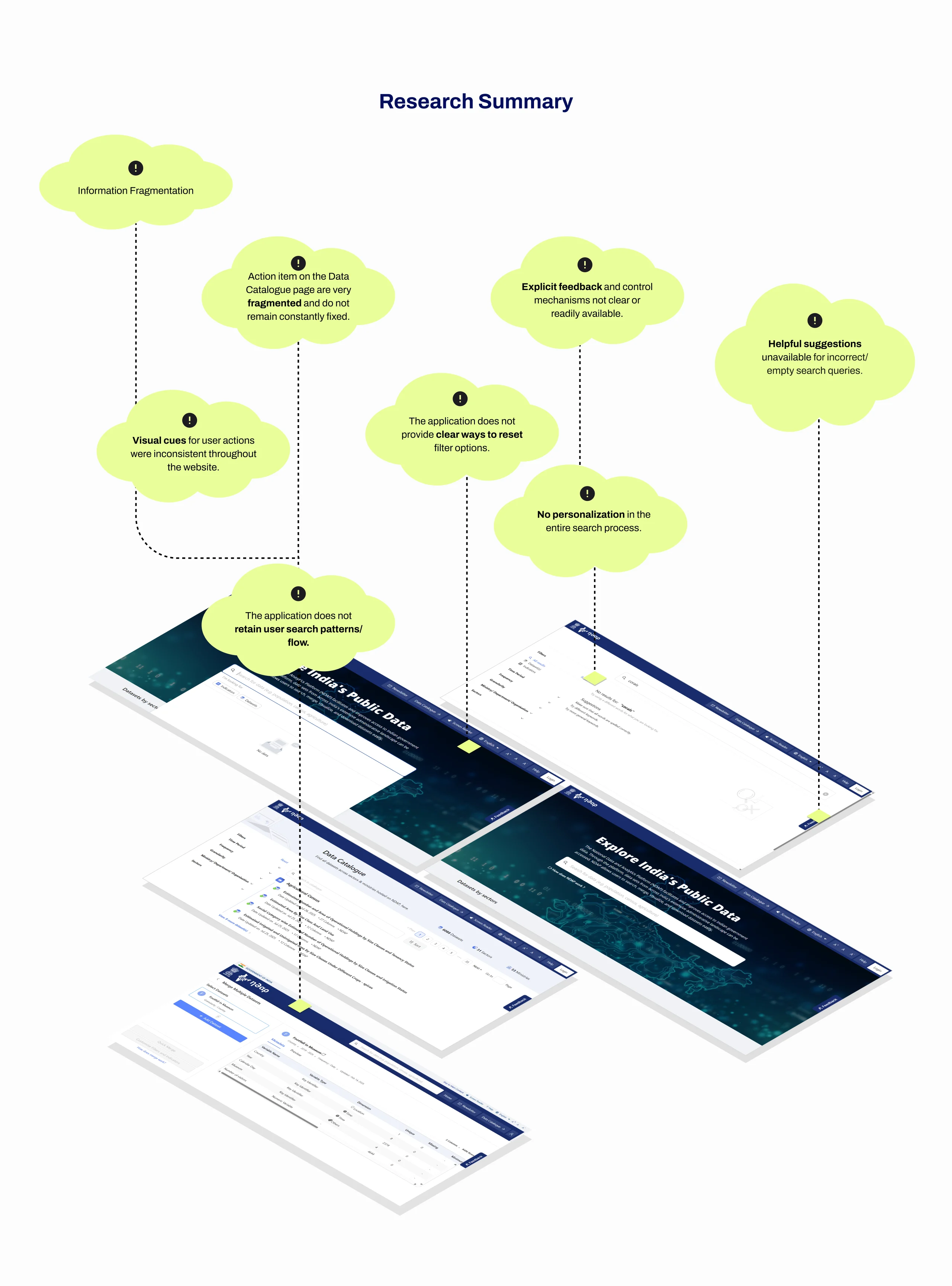
Research summary
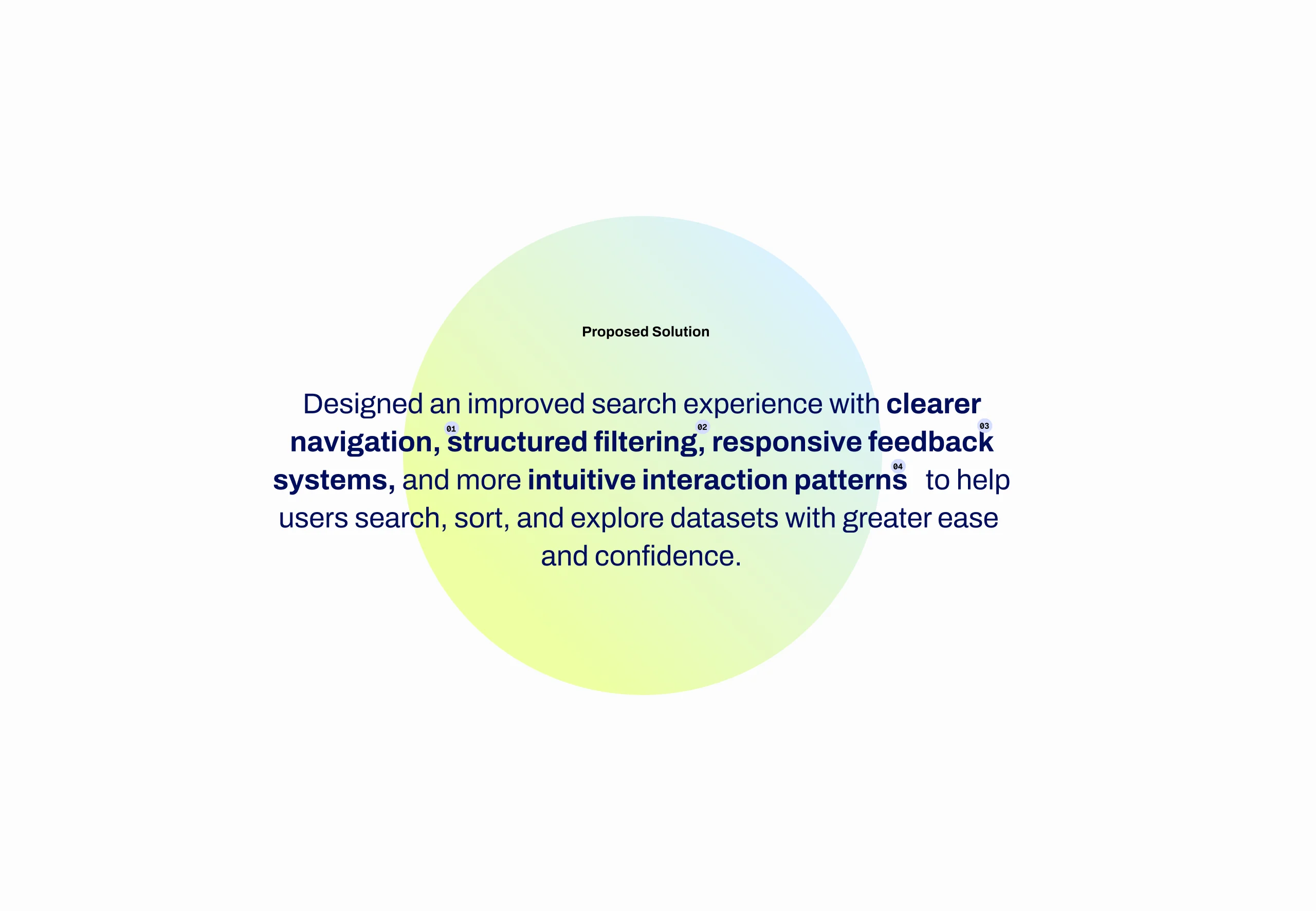
Proposed solution
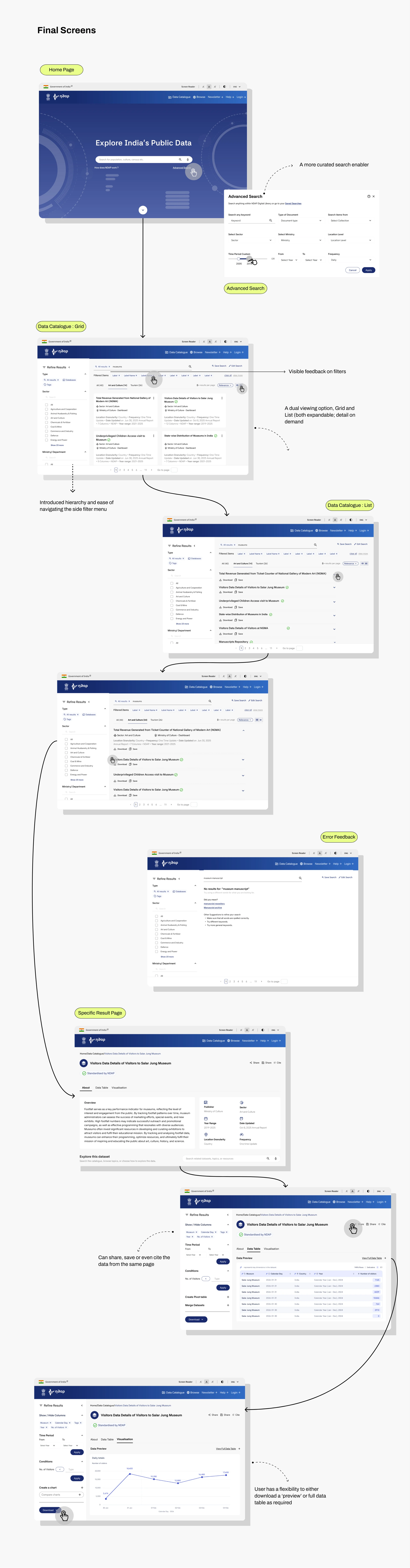
Designed an improved search experience with clearer navigation, structured filtering, responsive feedback systems, and more intuitive interaction patterns to help users search, sort, and explore datasets with greater ease and confidence.
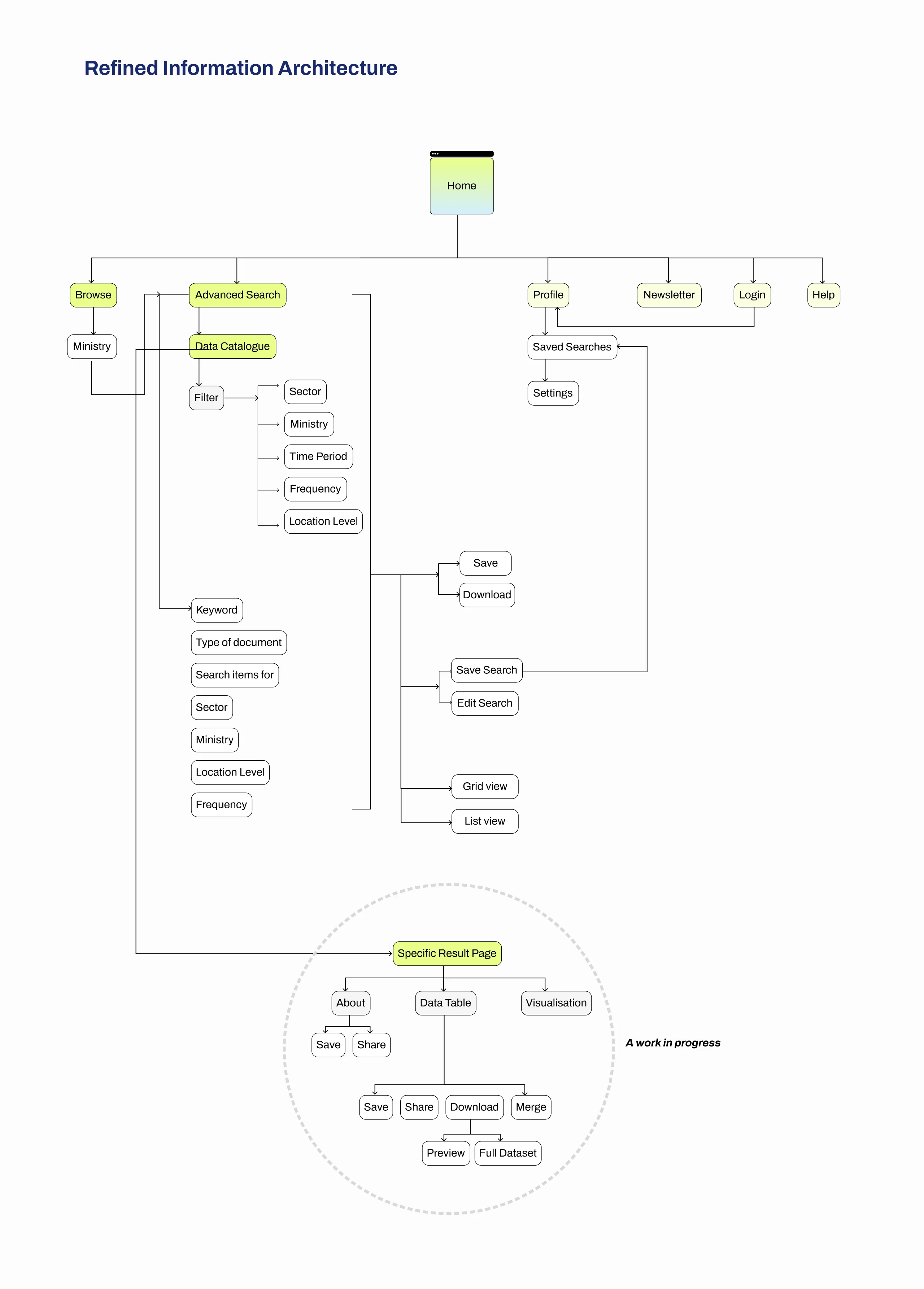
Refined information architecture
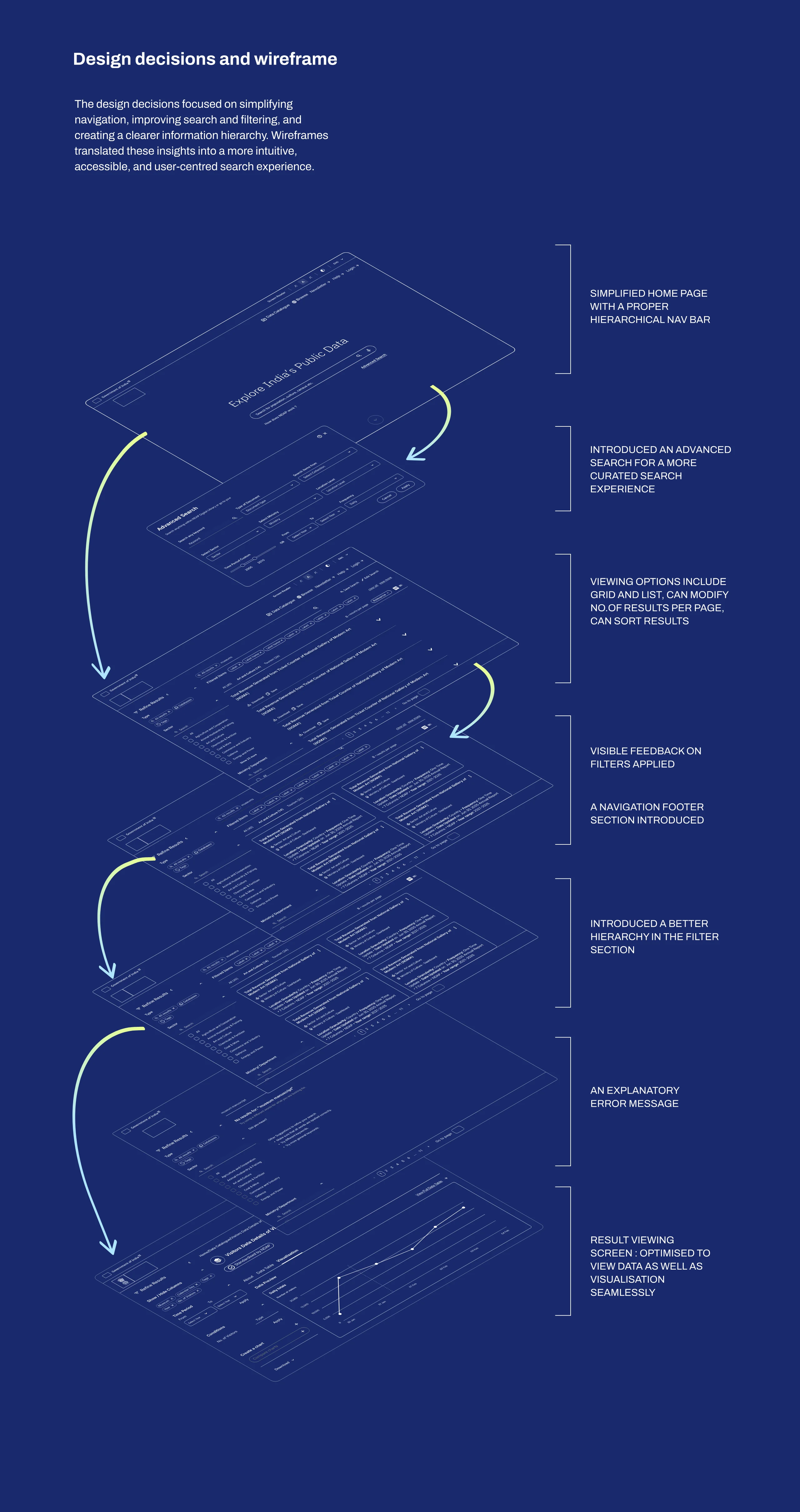
Design decisions and wireframe
The design decisions focused on simplifying navigation, improving search and filtering, and creating a clearer information hierarchy. Wireframes translated these insights into a more intuitive, accessible, and user-centred search experience.
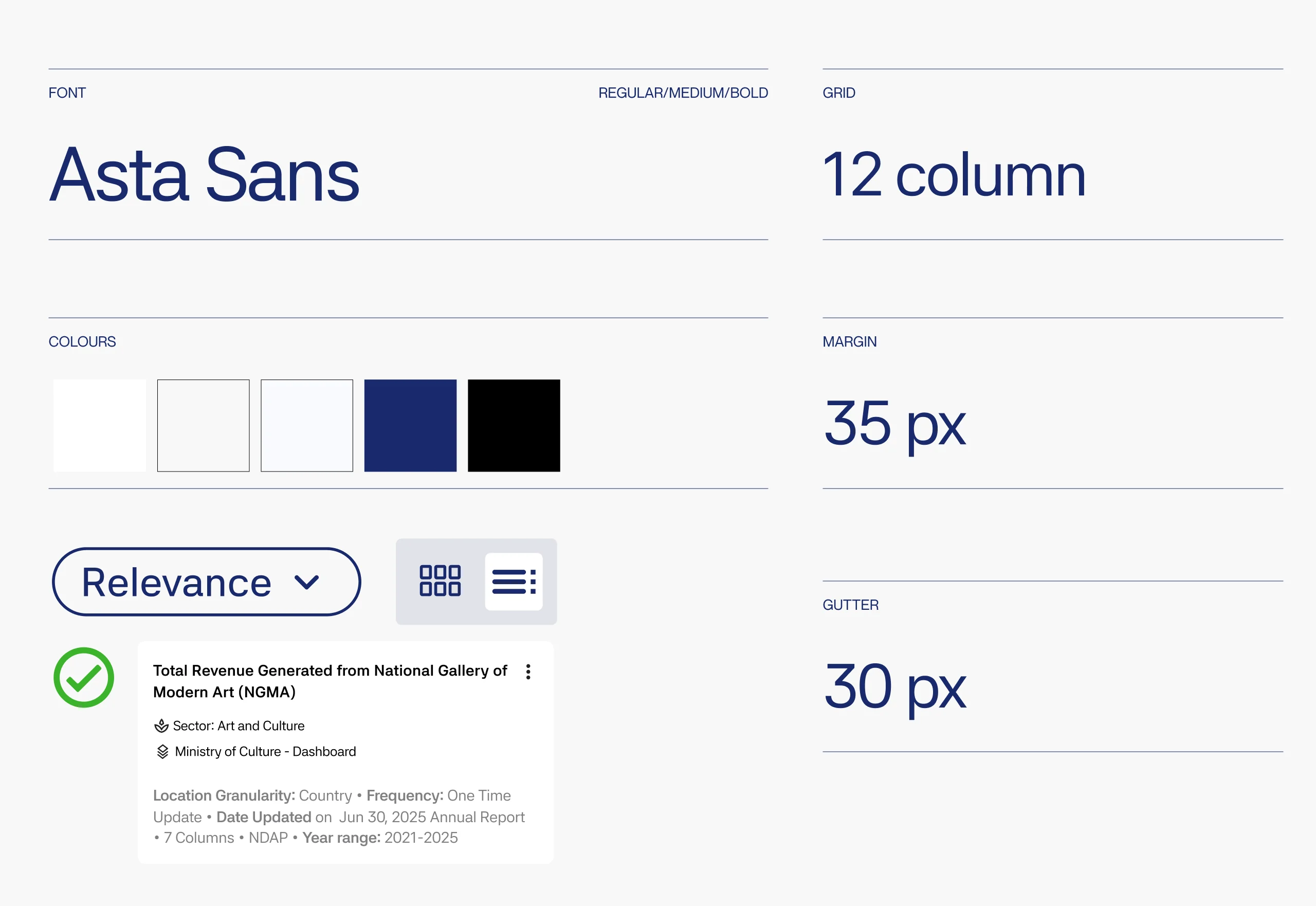
Style guide
Asta Sans on a 12-column grid.